What Is a Three‑Ball Incentive Spirometer?
A three‑ball incentive spirometer is a simple, non‑invasive breathing device. It helps patients rebuild lung strength through guided deep breathing.
Whether you’re recovering from surgery, managing a chronic respiratory condition, or just want better daily lung health, this tool gives you clear visual feedback. It’s lightweight, portable, and works just as well at home as in a clinical setting.
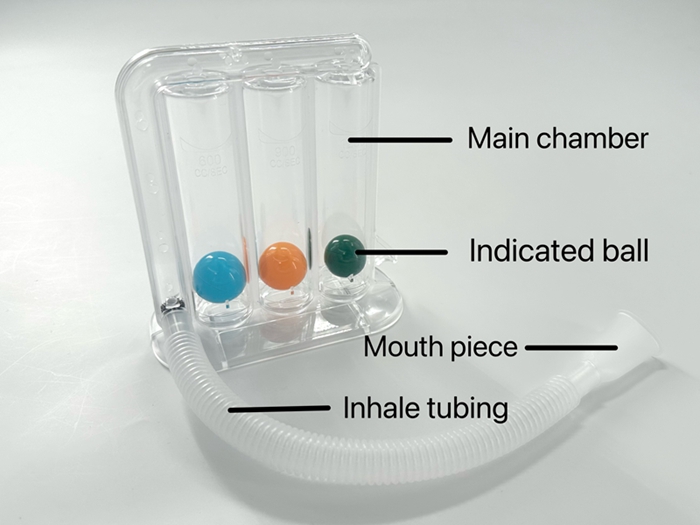
The design is straightforward: three balls rise inside a chamber when you inhale. The higher they go, the deeper your breath. That immediate feedback makes training easy—and effective.
💡 Why Use a Three‑Ball Spirometer?
Regular use helps:
-
Expand lung capacity
-
Clear mucus and respiratory secretions
-
Reduce chest congestion
-
Breathe more comfortably over time
It’s especially useful for:
-
Post‑operative patients (especially chest or abdominal surgery)
-
People with COPD, asthma, or other chronic lung issues
-
Anyone looking to strengthen their lungs before or after illness
🔧 Key Specs You Should Know
| Feature | Details |
|---|---|
| Purpose | Deep breathing, lung expansion, mucus clearance |
| Flow rate levels | 3 adjustable levels: 600±60 / 900±90 / 1200±120 cc/sec |
| Main chamber material | PS (medical grade) |
| Indicator balls | ABS |
| Mouthpiece | PP, non‑toxic |
| Filter sponge | FOAM |
| Other components | PE |
These materials meet international safety standards—safe for repeated use.
📋 How to Use (Step by Step)
Follow these steps for correct and effective training:
-
Sit or stand upright – in a chair, on a bed, or standing straight.
-
Connect the tubing to the main chamber. Hold the spirometer vertically.
-
Exhale normally, then place the mouthpiece in your mouth. Seal your lips tightly around it.
-
Inhale slowly and deeply – like sipping through a thick straw.
Try to raise one, two, or all three balls, and hold them up for 2–3 seconds. -
Remove the mouthpiece and exhale slowly.
-
Repeat steps 3–5 as many times as your doctor or therapist recommends.
-
Clean the mouthpiece after each use. Air‑dry it and store it in a clean bag.
📌 Always keep the spirometer upright during use—if tilted, the readings won’t be accurate.
🧼 Storage & Transport Tips
To keep your spirometer working properly:
Storage:
-
Keep indoors in a cool, dry, well‑ventilated place
-
Humidity ≤80%
-
Avoid corrosive gases, dust, and direct sunlight
Transport:
-
Don’t crush or place heavy objects on top
-
Keep away from rain, snow, and sun exposure
✅ Quick Maintenance Checklist
| After each use | Clean and air‑dry the mouthpiece |
|---|---|
| Weekly | Wipe the chamber with a dry cloth |
| Monthly | Check for cracks or worn parts |
| As needed | Replace if balls don’t move smoothly |
🏁 Final Takeaway
A three‑ball incentive spirometer is one of the simplest, most reliable tools for improving lung health. It gives real‑time feedback, fits any setting, and works for both rehab and daily maintenance.
If you or your patients need better breathing training—without complexity or high cost—this is a smart place to start.